
Foot or heel pain can make walking, exercising and everyday activities uncomfortable. Cold laser therapy, also called low-level laser therapy (LLLT), is a non-invasive treatment that may be considered for selected musculoskeletal conditions after a clinical assessment.
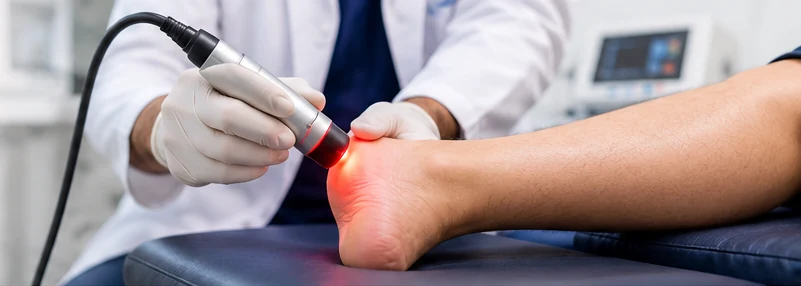
If you are exploring cold laser injury treatment in India, start with an accurate diagnosis. The Foot Doctor in Hyderabad provides foot and ankle assessments to help identify the cause of pain and discuss appropriate treatment options.
What Is Cold Laser Therapy?
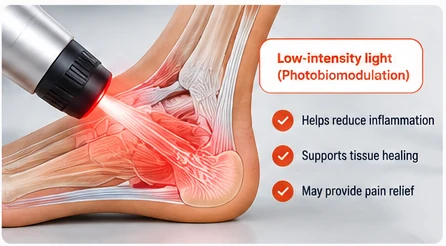
Cold laser therapy uses low-intensity light applied to a specific area of the body. It is a form of photobiomodulation, a term describing the biological effects of light on tissues. Unlike a surgical laser, it does not cut or remove tissue.
The aim is to help manage symptoms in suitable patients. It should not be described as a guaranteed way to regenerate tissue, repair every injury or avoid surgery.
Can Cold Laser Therapy Help Foot and Heel Pain?
Low-level laser therapy has been studied for plantar fasciitis and some lower-limb tendon conditions. However, research findings vary. Some studies report pain relief, while improvements in overall function and longer-term outcomes are less consistent.
Your diagnosis, the device and treatment settings, and the rehabilitation plan all matter. Evidence for one condition should not be assumed to apply to every cause of foot pain.
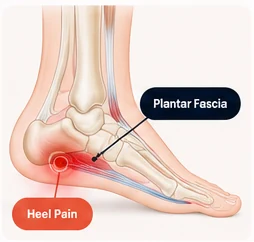
Before recommending treatment, a clinician should assess whether your symptoms relate to plantar fascia irritation, a tendon problem, an injury or another condition requiring a different approach.
Potential Benefits and Important Limitations
When appropriate, cold laser therapy may offer:
- A non-invasive treatment option without a surgical incision.
- Possible symptom relief for selected conditions.
- An option to consider alongside a broader rehabilitation plan.
These potential benefits are not guaranteed. Treatment should have clear goals, such as improving walking comfort or tolerance of daily activities, with progress reviewed rather than assuming that more sessions will always help.
What Happens During a Treatment Appointment?
- Assessment: Your clinician reviews your symptoms, medical history, previous treatment and activity levels, and examines the affected foot or ankle.
- Treatment discussion: If laser therapy is appropriate, the clinician explains the expected benefits, uncertainties, alternatives and safety precautions.
- Application: A trained professional applies the device according to its instructions and the prescribed treatment protocol. Appropriate laser eye protection is used.
- Review: Your response is monitored and the plan is adjusted if symptoms persist, worsen or fail to improve.
Ask the clinic about appointment length and preparation when booking. These depend on the assessment and the device being used.
\n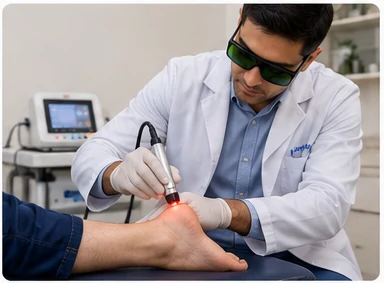
How Many Cold Laser Therapy Sessions Are Needed?
There is no single treatment schedule suitable for every patient. The proposed number and frequency of sessions depend on the diagnosis, treatment protocol and response.
Before starting, ask when progress will be reviewed, what improvement would justify continuing, and what alternatives may be considered if treatment does not help. Avoid relying on promises of recovery within a fixed number of visits.
Does Cold Laser Therapy Replace Physiotherapy?
Laser therapy should not automatically replace exercises, activity modification, footwear advice or other care recommended for the underlying condition. Ask your clinician how it fits into your treatment plan and what evidence supports adding it.
For foot and ankle pain, understanding the cause of symptoms is more useful than choosing a treatment solely because it uses a particular technology.
\n
Safety and Suitability
Suitability needs to be checked before treatment. Tell the clinician about your medical conditions, medicines, pregnancy, skin changes, wounds and any reduced sensation in your feet. The device's instructions and your individual circumstances determine the precautions needed.
Laser light must not be directed into the eyes. Follow the professional's instructions on protective eyewear and report discomfort during treatment.
If you have diabetes and notice a new wound, redness, heat or swelling in your foot, seek prompt medical assessment. Do not delay diabetic foot care while arranging laser treatment.
Cold Laser Therapy Cost in India
The cost can vary according to the clinic, assessment required, device, number of sessions and other care included in the plan.
Ask for a written estimate explaining consultation fees, the per-session charge, the proposed course and review appointments. Contact The Foot Doctor for current availability and pricing after an assessment; an accurate individual quotation is more useful than a general online price.
Frequently Asked Questions
Is cold laser therapy the same as laser surgery?
No. Low-level laser therapy applies low-intensity light without making a surgical incision. Laser surgery uses a different approach to cut, remove or otherwise treat tissue.
Is cold laser therapy effective for plantar fasciitis?
It has been studied for plantar fasciitis, but findings are mixed and results depend on the treatment protocol. Discuss the likely benefit, uncertainty and alternatives with your clinician.
Will the treatment hurt?
It is a non-invasive procedure. Ask what sensations to expect from the specific device being used, and tell the treating professional if you experience discomfort.
How quickly will I notice an improvement?
There is no reliable universal timeline. Your clinician should explain when to review your symptoms and whether the treatment is helping you meet your agreed goals.
Can cold laser therapy guarantee that I will avoid surgery?
No. Whether you need surgery or another treatment depends on the underlying diagnosis. Laser therapy should not delay a procedure or investigation that your clinician considers necessary.
Can people with diabetes have cold laser therapy?
This requires an individual assessment. Diabetes-related foot problems need appropriate evaluation and care; laser therapy is not a substitute for managing infection, circulation problems or an active foot wound.
The Foot Doctor · Hyderabad
Book a Foot and Ankle Assessment
If foot or heel pain is affecting your daily routine, discuss the cause of your symptoms and the available treatment options with The Foot Doctor. Book a consultation to discuss whether cold laser therapy is suitable for your diagnosis.
Call: +91 8866549555 / +91 8977544192
Email: info@thefootdoctor.in
Medical References
- Effect of Local Laser Therapy on Plantar Fasciitis: A Meta-Analysis (2026).
- Efficacy of low-level laser therapy in lower extremity tendinopathy or plantar fasciitis: systematic review and meta-analysis (2022).
- US FDA draft guidance on photobiomodulation devices, including safety considerations.
- The Queen Elizabeth Hospital King's Lynn NHS Foundation Trust: diabetic foot warning signs.