Ankle Impingement
Ankle impingement occurs when soft tissue or bone causes painful restriction during ankle movement. In selected cases, arthroscopy can be used to identify and treat the abnormal tissue or bone causing the symptoms.
Cartilage Injuries
Damage to the cartilage within a joint can cause pain, swelling, stiffness and difficulty with movement. Arthroscopy may help assess and treat certain cartilage injuries.
Loose Bodies in the Joint
Small fragments of bone or cartilage can sometimes become loose within a joint. These may cause pain, catching, locking or restricted movement. Arthroscopic surgery may allow the surgeon to remove these loose bodies.
Chronic Ankle Problems
Repeated ankle injuries or persistent symptoms following an ankle sprain may sometimes be associated with internal joint problems. After clinical assessment and imaging, arthroscopy may be considered when appropriate.
Sports-Related Foot and Ankle Injuries
Athletes and physically active individuals may develop joint injuries due to repetitive stress or trauma. Some selected sports injuries can be treated using minimally invasive arthroscopic techniques.
Benefits of Arthroscopic Surgery
When arthroscopy is appropriate for a particular condition, it can offer several potential advantages.
Smaller Incisions
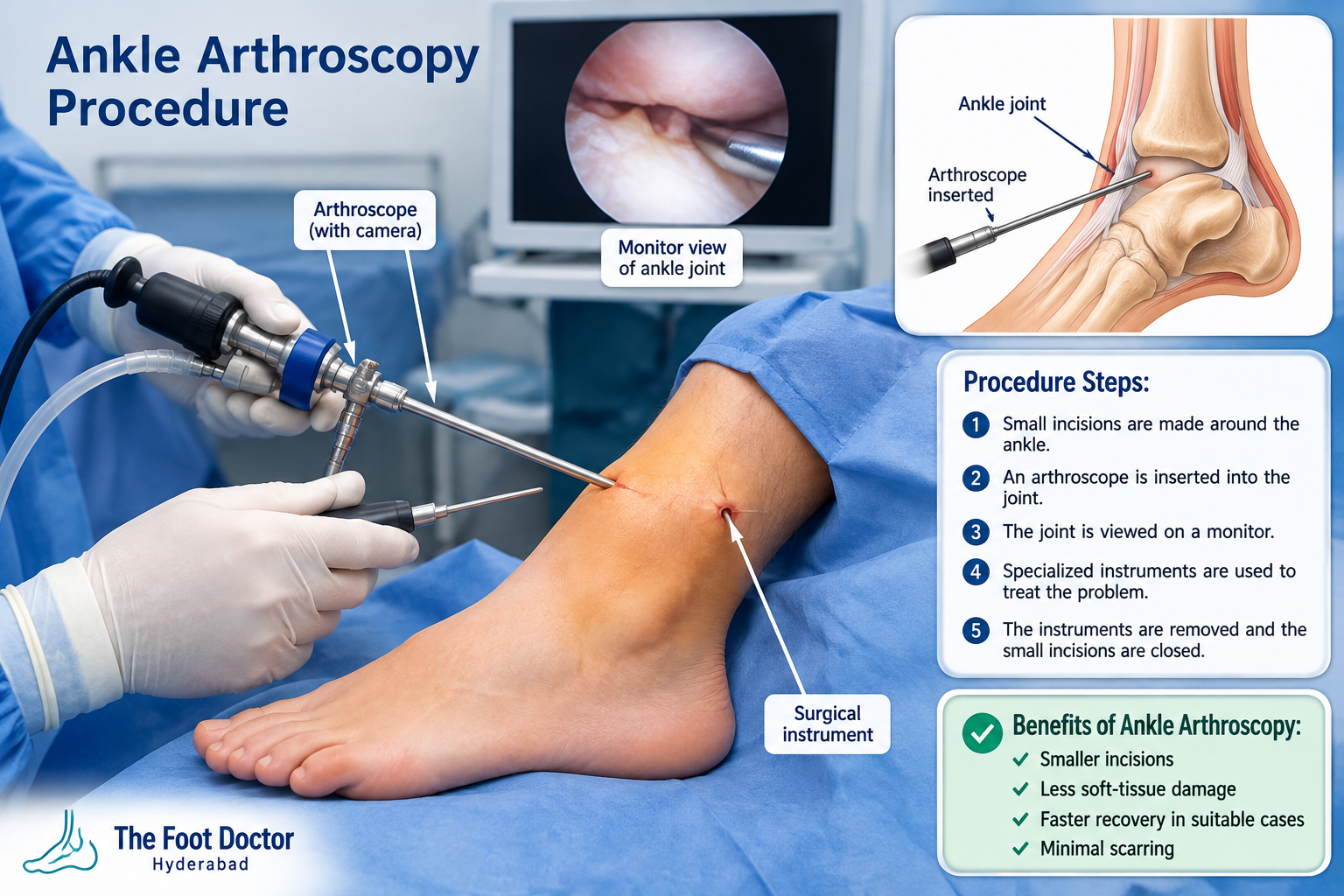
Arthroscopic procedures are performed through small openings rather than the larger incision often required for traditional open surgery.
Less Soft-Tissue Disruption
The minimally invasive approach may reduce disruption to surrounding tissues.
Reduced Scarring
Because the incisions are small, postoperative scars are generally smaller than those associated with many open procedures.
Detailed Visualization
The arthroscope provides a magnified view of the joint, allowing the surgeon to assess internal structures directly.
Potentially Faster Recovery
Some patients may return to movement and rehabilitation sooner than with certainopen procedures. Recovery depends on the specific surgery and individual patient factors